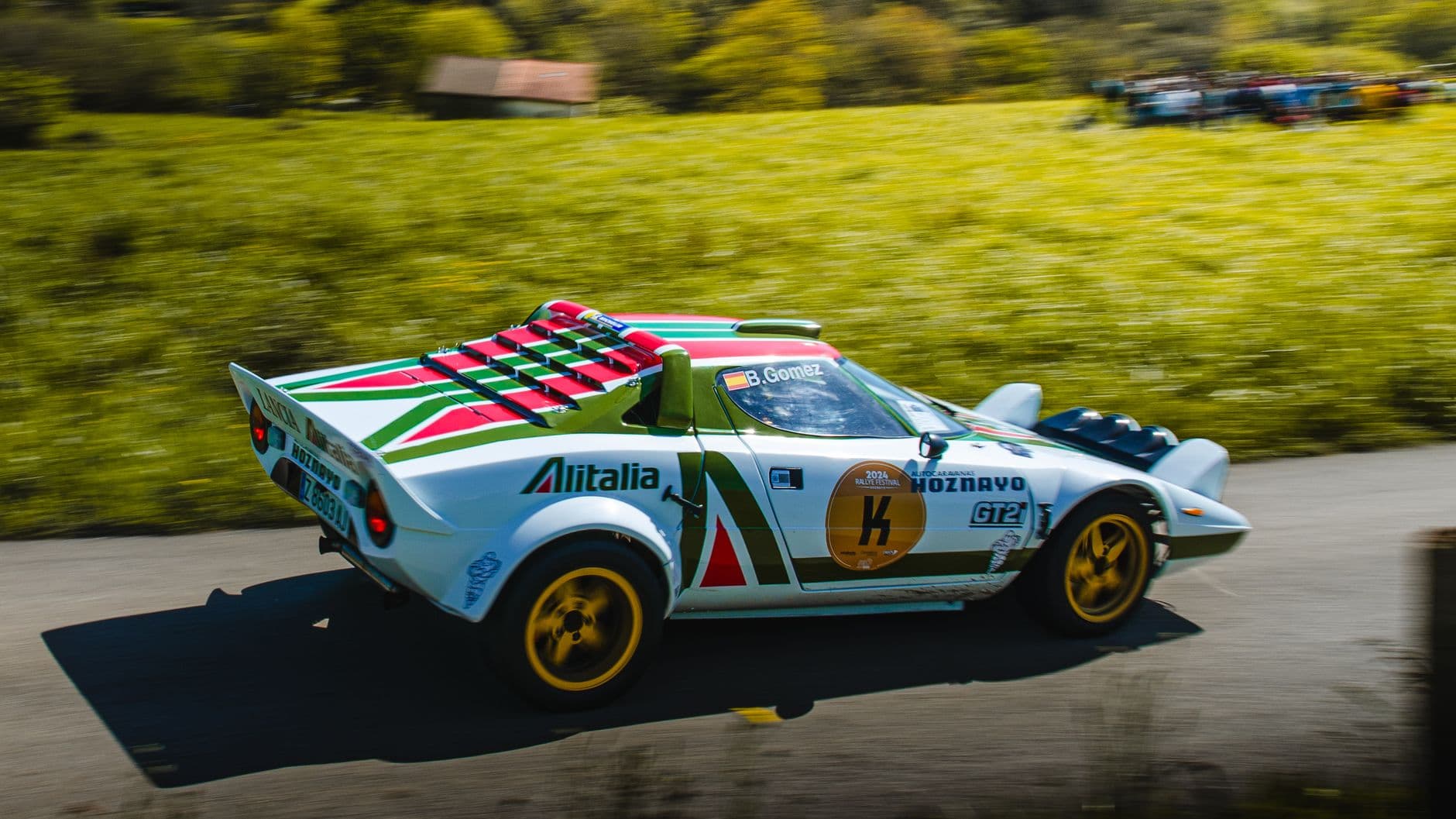
The Lancia Stratos was the first car ever built purely to win rallies, and it won three world championships in a row. Marcello Gandini drew its short, sharp wedge at Bertone, Ferrari supplied the V6 engine, and between 1974 and 1976 it dominated the sport like nothing before it. Around 492 were made to satisfy the rules, and originals now trade for serious money.
What made the Stratos different from other rally cars?
Every rival was a modified road car; the Stratos was designed from scratch to win rallies and nothing else. Lancia built it around a mid-mounted engine and an extremely short wheelbase, which made it dart into corners with a speed that adapted saloons could not touch.
That single-minded design was its strength and its danger. The short wheelbase made the Stratos twitchy and demanding at the limit, but in the hands of a skilled driver it was devastatingly quick, and it rewrote what a rally car could be.
Who designed the Stratos, and what engine does it use?
Marcello Gandini designed it at Bertone, the same designer behind the Lamborghini Miura and the Lamborghini Countach. He gave the Stratos a stubby, aggressive wedge with a wraparound windscreen, a shape as extreme in its way as his supercars.
The engine came from Ferrari. Lancia used the 2.4-litre Dino V6, mounted behind the driver, which gave the light car a soundtrack and a punch that few rally machines could match. A racing-bred engine in a purpose-built chassis was the whole idea.
How successful was the Stratos in rallying?
It won the World Rally Championship for manufacturers three years running, in 1974, 1975 and 1976. No car had ever been built so specifically for the job, and the results showed it, with drivers such as Sandro Munari taking win after win, including the Monte Carlo Rally.
| Lancia Stratos | Detail |
|---|---|
| Years | 1973–1978 |
| Designer | Marcello Gandini, Bertone |
| Engine | 2.4L Ferrari Dino V6, mid-mounted |
| Titles | WRC manufacturers' champion 1974, 1975, 1976 |
| Built | ~492 (homologation) |
The championships gave the Stratos a status that outlived its era. It proved that a car conceived for a single purpose could beat everything built the old way, and it set the template every purpose-built rally car has followed since.
How much is a Lancia Stratos worth?
A road-going Stratos Stradale now trades from the high six figures into seven, while a genuine works rally car is worth far more. Only about 492 were built to meet the homologation rules, and few road cars have survived unmodified, which keeps clean originals scarce.
History sets the ceiling, as our guide to what makes a classic car worth millions explains. A Stratos with a documented competition record sits in a different bracket from a standard road car, because in rallying, as in racing, provenance is everything.
Where does the Stratos sit in the quiet-luxury canon?
The Stratos is the sharpest object in this company, and it earns the exception. It is not a refined grand tourer but a purpose-built weapon, collected for what it achieved and how uncompromisingly it was made, which is its own kind of integrity.
It also shares its DNA with the road cars around it. The same Gandini wedge that shaped the Miura and Countach shaped the Stratos, so it reads as sculpture as much as machine, and it belongs with them as one of the great designs of its decade.
Frequently asked questions
How many Lancia Stratos were made? Around 492 between 1973 and 1978, built mainly to meet the homologation rules that allowed the car to compete.
What engine does the Lancia Stratos use? A 2.4-litre Ferrari Dino V6, mounted behind the driver, which gave the light, short car its performance and its distinctive sound.
How many rally titles did the Stratos win? Three World Rally Championship manufacturers' titles in a row, in 1974, 1975 and 1976.