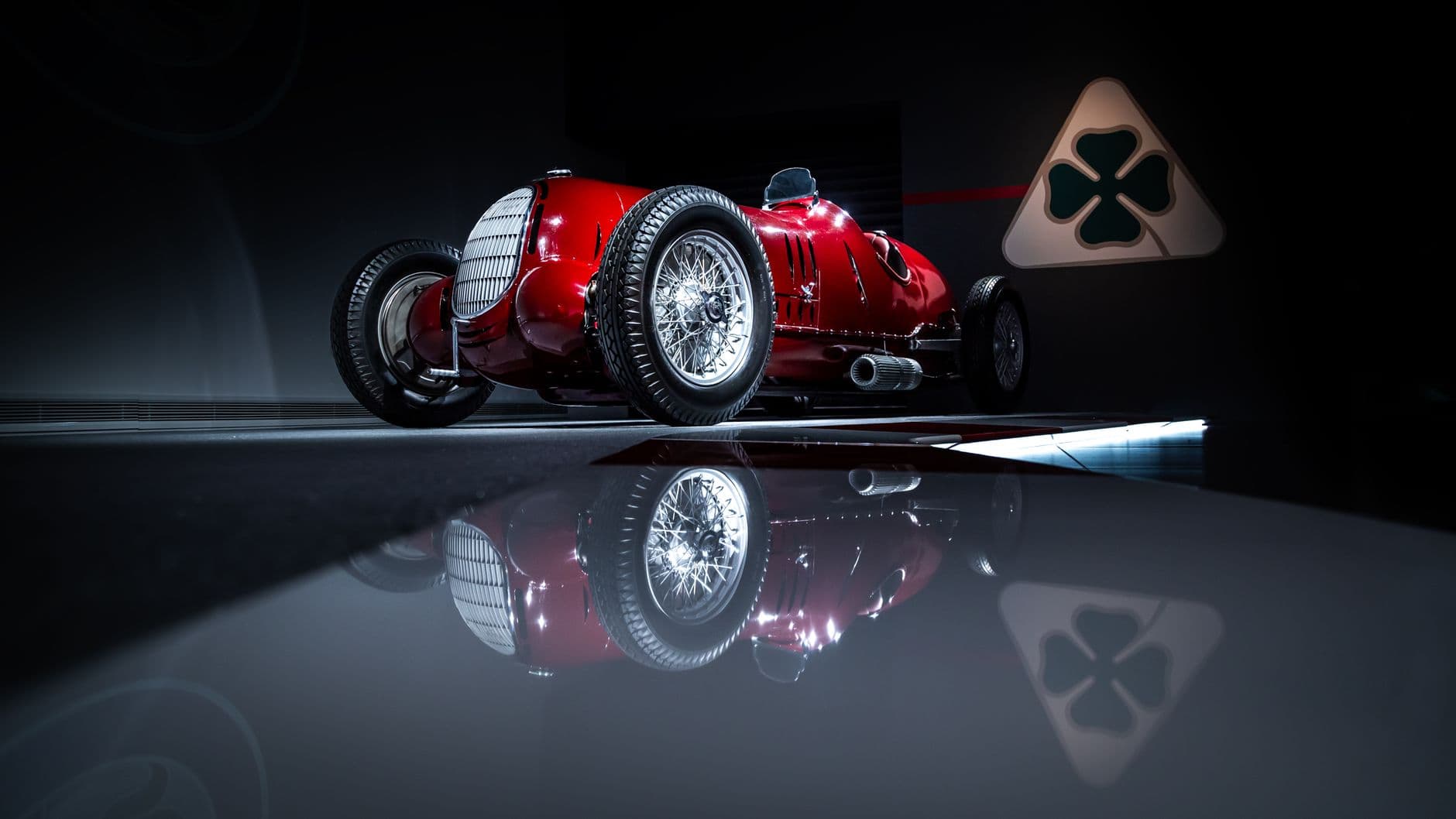
The Alfa Romeo 8C 2900 is often named the most beautiful pre-war car, and the price history supports it. Alfa built only around 40 in the late 1930s, they won the 1936 Mille Miglia outright, and good examples now sell for twenty to forty million dollars. Like the Bugatti Atlantic, it is the point where a car becomes a work of art.
Why is the 8C 2900 so valuable?
Its value comes from a rare mix of beauty, engineering and race history in tiny numbers. Only about 40 cars were built across the 2900A and 2900B, each one hand-bodied, and survivors trade privately or at the very top of the auction market rather than in ordinary sales.
A 2900B Spider sold through Gooding and Company for around 19.8 million dollars in 2016, and the finest cars are valued well beyond that today. Those figures put the 8C alongside the Bugatti Type 57SC Atlantic at the peak of pre-war collecting.
What makes the 8C 2900 so fast for its era?
The heart of the car is a 2.9-litre straight-eight engine with twin superchargers, producing up to around 220 horsepower at a time when most cars made a fraction of that. The engineering came from Vittorio Jano, one of the great designers of the age, and it gave the 8C genuine racing pace on road and track alike.
The competition version proved it. In 1936 the 8C 2900A took the first three places in the Mille Miglia, the brutal thousand-mile road race across Italy, a result that sealed the model's reputation before the road cars even reached customers.
Who built the bodies, and why are they so admired?
The most celebrated 8C 2900s wear aluminium bodies by Touring of Milan, built using its patented Superleggera method of thin panels over a light tubular frame. The 2900B Berlinetta and Spider shapes are considered among the finest ever drawn, flowing and tense at once, closer to sculpture than to machinery.
That artistry is why the car keeps winning the world's great concours events decades later. An 8C 2900 has taken Best of Show at Pebble Beach, the highest honour in the classic-car world, judged on exactly the beauty and originality collectors prize most.
What is the 8C's connection to Enzo Ferrari?
Alfa Romeo's racing in this era was run by Scuderia Ferrari, the team Enzo Ferrari founded and led before he built cars under his own name. The works 8C racers were prepared and entered by Ferrari's organisation, so the model sits directly in the story that would later produce Ferrari itself.
That link adds a layer of history few cars can match. The 8C 2900 is not only an Alfa Romeo masterpiece but a bridge to the founding of the most famous name in motoring, which is part of why its provenance carries such weight, exactly as our guide to what makes a classic car worth millions explains.
Where does the 8C sit in the quiet-luxury canon?
The 8C 2900 is the quietest kind of luxury there is, because almost no one will ever see one. It is rare, beautiful and historically vital, an object collected as much for its form as its speed, the same idea explored in the layered metal cars of Antoine Dufilho many years later.
Value this concentrated in a car this lovely sits at the very top of what collecting can reach. It asks nothing loud and offers everything, which is the essence of taste over show.
Frequently asked questions
How many Alfa Romeo 8C 2900s were built? Only around 40 in total across the 2900A and 2900B between 1935 and 1939, each hand-bodied, which is a key reason for their value.
How much is an 8C 2900 worth? The cars sell at the very top of the market; a 2900B Spider reached about 19.8 million dollars in 2016, and the finest examples are valued well beyond that.
Did the 8C 2900 win races? Yes. The 8C 2900A took the first three places in the 1936 Mille Miglia, and the model is regarded as one of the great pre-war competition cars.