The Porsche 911 has been in production since 1963, which makes it the longest-running sports car in the world. For collectors, though, one era stands above the rest: the air-cooled cars built from 1963 to 1998. The last of them, the 993, and the featherweight 1973 Carrera RS 2.7 now command the serious money, and the reasons are worth understanding before you buy.
Why was the Porsche 911 almost called the 901?
Porsche showed the car as the 901 at the Frankfurt motor show in September 1963, then had to change the name because Peugeot claimed the rights to three-digit numbers with a zero in the middle. A quick swap to 911 solved it, and the badge stuck for good. Ferdinand Alexander Porsche, grandson of the company's founder, drew the shape, and its sloping roofline has survived every redesign since.
Underneath sat the layout that still defines the car: an air-cooled flat-six hung out behind the rear axle. The first 2.0-litre engine made 130 bhp, modest by later standards, but the balance and the sound gave the 911 a character rivals spent decades chasing.
What makes the air-cooled 911 the one collectors want?
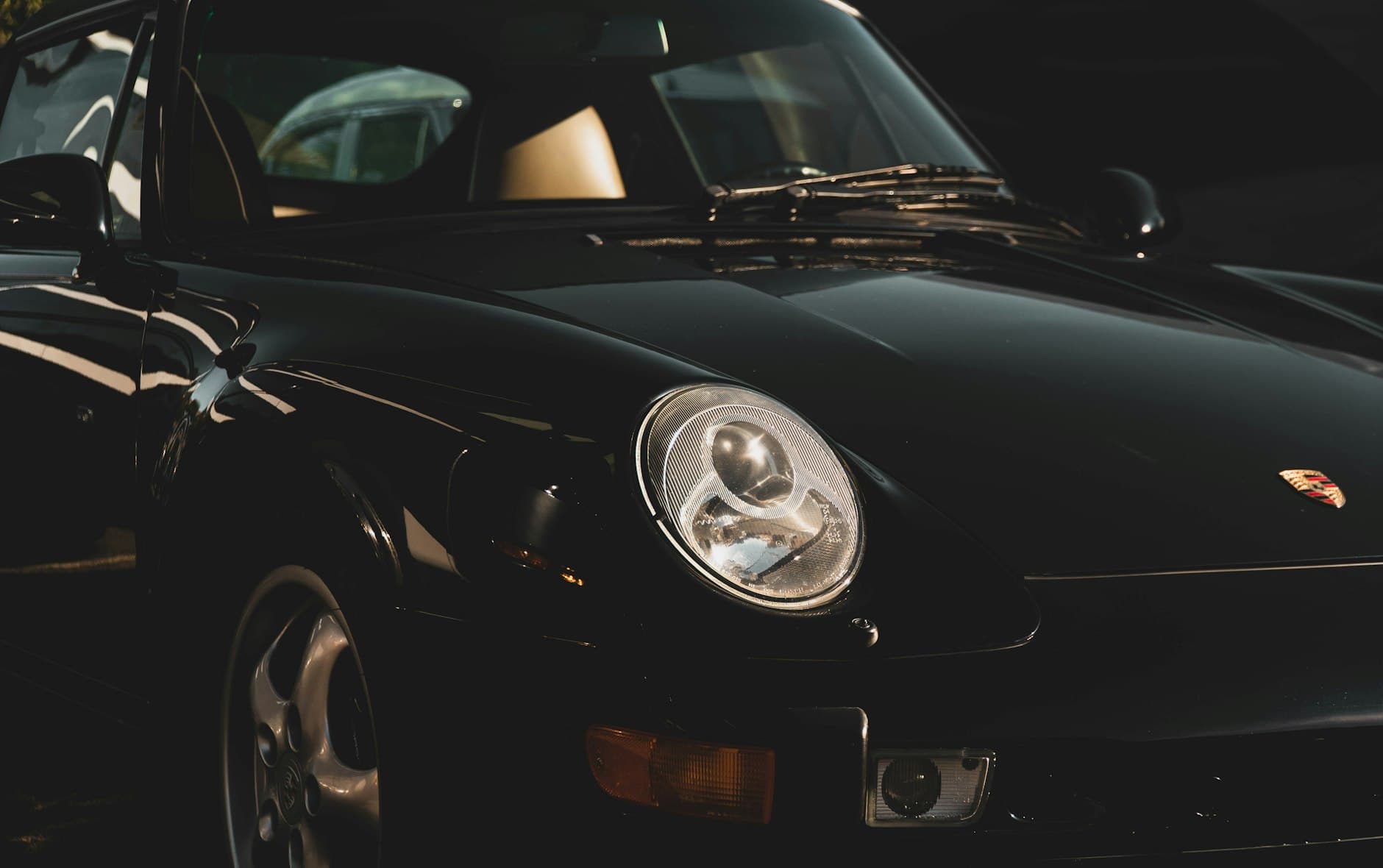
The air-cooled cars, built for 35 years until the 993 bowed out in 1998, are prized because each generation refined the same honest recipe rather than replacing it. Buyers value the mechanical directness and the finite supply, since Porsche switched to water cooling with the 996 and never looked back.
| Generation | Years | Engine | Signature | Collector standing |
|---|---|---|---|---|
| Original (long-hood) | 1963–1973 | 2.0–2.7 flat-six | Slim chrome bumpers | Blue chip, esp. 2.7 RS |
| G-series | 1974–1989 | 2.7–3.2 flat-six | Impact bumpers, 930 Turbo | Rising, Turbo prized |
| 964 | 1989–1994 | 3.6 flat-six | Coil springs, Carrera 4 | Undervalued, climbing |
| 993 | 1994–1998 | 3.6–3.8 flat-six | Last air-cooled | Peak air-cooled desirability |
Across every version Porsche has built more than a million 911s since 1963, so the car is common in the way the earliest Jaguar E-Type is not. The value sits in the specific cars: the homologation specials, the Turbos and the final air-cooled models.
Which air-cooled 911 is the most valuable?
The 1973 Carrera RS 2.7 leads the field, with strong money also chasing the 993 Turbo and the earliest short-wheelbase cars. Porsche built 1,580 examples of the RS 2.7 to homologate it for racing, fitting a lightweight shell and the famous ducktail spoiler, and good ones now trade in seven figures.
Values tracked by collector-car insurer Hagerty put concours RS 2.7s at the top of the range, with the 993 Turbo and clean early cars well behind but still climbing (checked August 2026). Condition and originality decide everything, which is why the same rules apply here as to the blue-chip lots on our guide to the most expensive cars ever sold at auction.
Why did the last air-cooled cars soar in value?
Prices climbed because supply is fixed and demand arrived all at once. Between roughly 2012 and 2016 a generation that grew up wanting a 911 reached the point of being able to buy one, and they wanted the air-cooled cars specifically, since the 996 had moved the model to water cooling and, for many, diluted the feel.
The 993 gained the most from that shift. As the final air-cooled 911, it became the obvious car to keep, and clean examples pulled away from the water-cooled 996 that followed. Scarcity did the rest: Porsche made no more of them after 1998, and it never will.
Where does the 911 fit in the quiet-luxury canon?
It belongs there through restraint and continuity rather than drama. The 911 evolved instead of reinventing itself, and a 993 parked next to a 1965 original reads as the same idea, quietly improved over three decades. That discipline is the same instinct that keeps the Mercedes-Benz 300 SLR admired, and it is why the shape works so well as sculpture.
A good air-cooled 911 also asks to be driven, not stored. It is fast enough to enjoy, usable every day, and understated in a way that flatters the owner rather than the badge, which is the whole point of collecting on taste rather than noise.
Frequently asked questions
Which is the last air-cooled Porsche 911? The 993, built from 1994 to 1998; the 996 that replaced it in 1998 introduced water cooling and a new body.
Is an air-cooled 911 a good investment? The best original examples, especially the 2.7 RS and the 993, have held value well, but running costs are high, so buy the most documented car you can and treat any gain as a bonus.
Why is the Porsche 911 called the 911 and not the 901? Porsche launched it as the 901 in 1963, but Peugeot held the rights to three-digit names with a central zero, so Porsche changed the middle digit to a one.