Two identical-looking classics can sell for wildly different sums, and the gap is rarely about horsepower. Five things decide whether a car brings thousands or millions: provenance, originality, rarity, condition and significance. Learn to read those, and results like a 135-million-euro Mercedes or a 48-million-dollar Ferrari stop looking random.
What actually makes a classic car worth millions?
Value comes from a stack of factors that reward history and honesty over performance. A car with race wins, its original engine, a low production run and an unbroken paper trail will always beat a prettier example without that record. The table below sets out what each factor means and how it moves the price.
| Factor | What it means | Effect on price |
|---|---|---|
| Provenance | Race results, famous owners, event history | Can multiply value several times over |
| Originality | Matching-numbers engine, factory panels and spec | Large premium over rebuilt cars |
| Rarity | Low production, homologation or special editions | Sets the ceiling for the model |
| Condition | Concours restoration or preserved original | Wide swing between grades |
| Significance | First of a line, design landmark, cultural icon | Underpins long-term demand |
The very top results combine all five at once. The Mercedes-Benz 300 SLR Uhlenhaut Coupe reached 135 million euros through RM Sotheby's in 2022, the highest price ever paid for a car, because it was rare, original, historically vital and beautiful in one package. Miss any one of those and the number falls fast.
Why does "matching numbers" matter so much?
A matching-numbers car keeps the exact engine and chassis it left the factory with, and that originality is one of the strongest price signals a buyer can find. Replacement engines, re-shelled bodies and later modifications all pull value down, sometimes by half, because collectors are paying for authenticity as much as for the car itself.
Documentation is what proves it. Build sheets, factory records such as a Porsche Kardex or Ferrari Classiche certification, and a continuous ownership history let a specialist confirm the car is what the catalogue claims. A fully documented example will out-sell an undocumented twin every time, and the gap widens as the values climb.
Preservation now competes with restoration at the top of the market. A worn but untouched original, the kind shown in a preservation class at Pebble Beach, can beat a flawless nut-and-bolt rebuild, because a car can only be original once.
How much does provenance change the price?
Provenance can multiply a car's value several times over, and race history is the strongest form of it. A chassis that won or competed at a major event, or passed through a famous collection, carries a story that buyers pay a heavy premium to own.
The Ferrari 250 GTO is the clearest case. Only 36 were built between 1962 and 1964, each with period competition history, and in 2018 a GTO sold for 48.4 million dollars through Gooding and Company at Pebble Beach, the public record for any car at the time. Private GTO deals are reported higher still. A famous name on the logbook does the same work: cars once owned by racing drivers or film stars routinely clear estimates that ordinary examples never approach.
Where are the world's great collector-car auctions held?
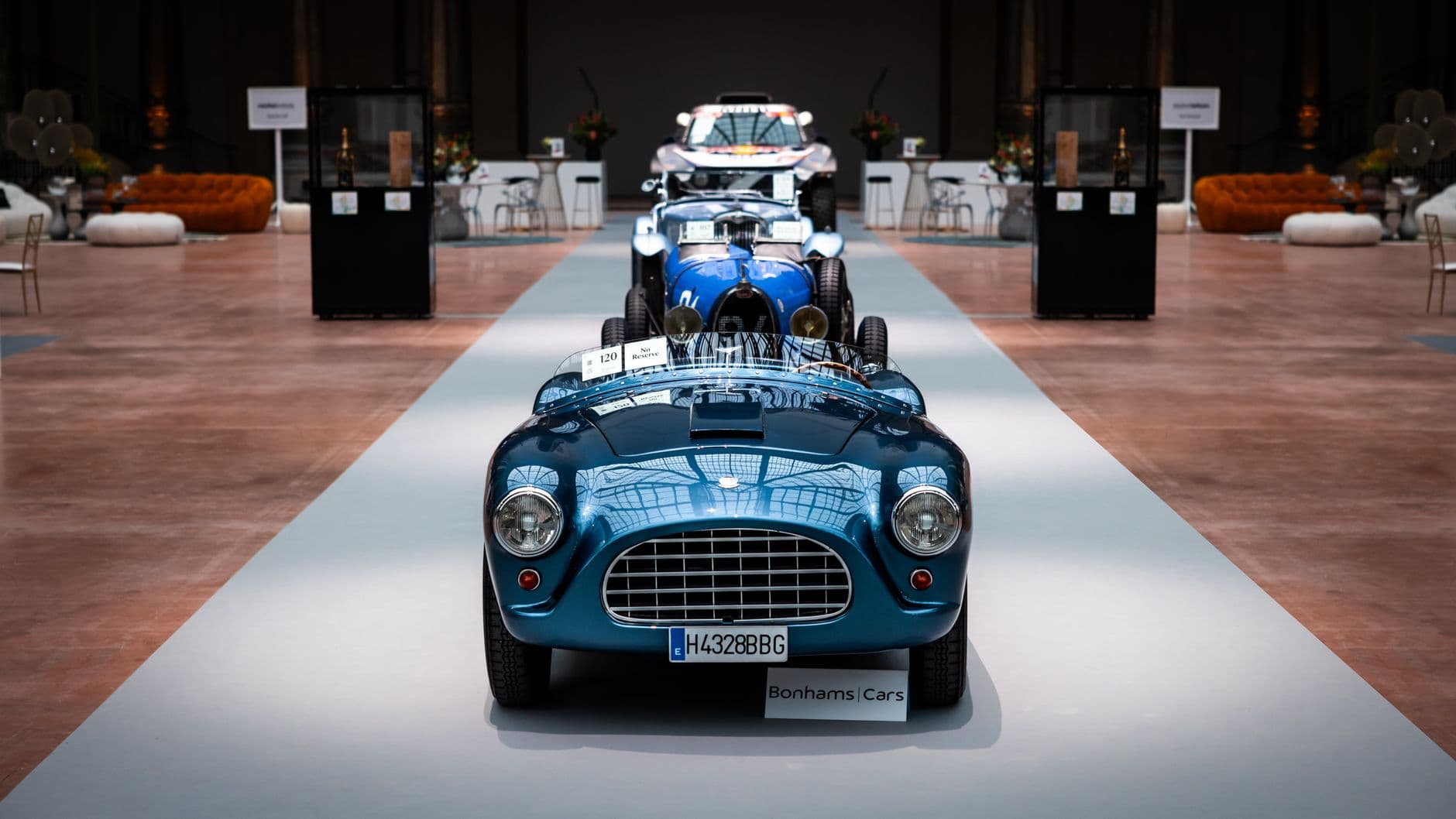
The blue-chip sales are run by three houses, RM Sotheby's, Gooding and Company and Bonhams, clustered around a handful of events each year. Monterey Car Week in California every August is the biggest stage, home to the Pebble Beach Concours and the sales that set most records, followed by Amelia Island in Florida each spring and Retromobile in Paris each winter.
Timing and setting matter because the right audience gathers in one room. A significant car offered at Monterey, in front of the collectors most likely to want it, will usually beat the same car sold quietly at a regional auction. Retromobile has produced its own headlines: in 2016 Artcurial sold a 1957 Ferrari 335 S for 32.1 million euros there, a European record at the time. The catalogue, the viewing and the marketing all feed the final number.
How does a car auction actually work?
Each lot carries a pre-sale estimate and, in most cases, a confidential reserve, which is the lowest price the seller will accept. Bidding runs up to the hammer price, and the winning bidder then pays a buyer's premium on top, typically in the low-to-mid teens as a percentage, so the number reported in the press is higher than the hammer alone.
Knowing that gap protects a buyer. A car that hammers at one million dollars can cost around 1.15 million once the premium is added, and sales tax or import duty may follow. Cars offered "without reserve" are the ones that can bring genuine bargains or runaway prices, since there is no floor to stop the fall or the climb.
Can you predict the next million-dollar classic?
No one gets it right every time, but the safest bet follows a simple rule: buy the best original example of a significant car with documented history. Cars that were rare and important when new, and have survived unmolested, tend to hold and grow their value, while cars bought purely on hype often stall once the fashion passes.
If a model needs a trendy story to justify its price rather than genuine rarity or history, treat that as a warning. The air-cooled Porsche boom rewarded cars that were always significant; the models that faded were the ones riding a moment. The market forgives a lot, but it rewards provenance, originality and significance far more reliably than it rewards a good marketing story.
Frequently asked questions
What is the single biggest factor in a classic car's value? Provenance, especially documented race history or a famous owner, tends to move the price more than anything else when the car is also original and rare.
Does restoration increase a classic car's value? A high-quality restoration helps, but an original well-preserved car often beats a restored one, because over-restoration can erase the authenticity collectors pay for.
What is a buyer's premium at a car auction? It is a fee the winning bidder pays the auction house on top of the hammer price, usually in the low-to-mid teens as a percentage of the sale.
What is the most expensive car ever sold at auction? The Mercedes-Benz 300 SLR Uhlenhaut Coupe, which sold for 135 million euros through RM Sotheby's in 2022.