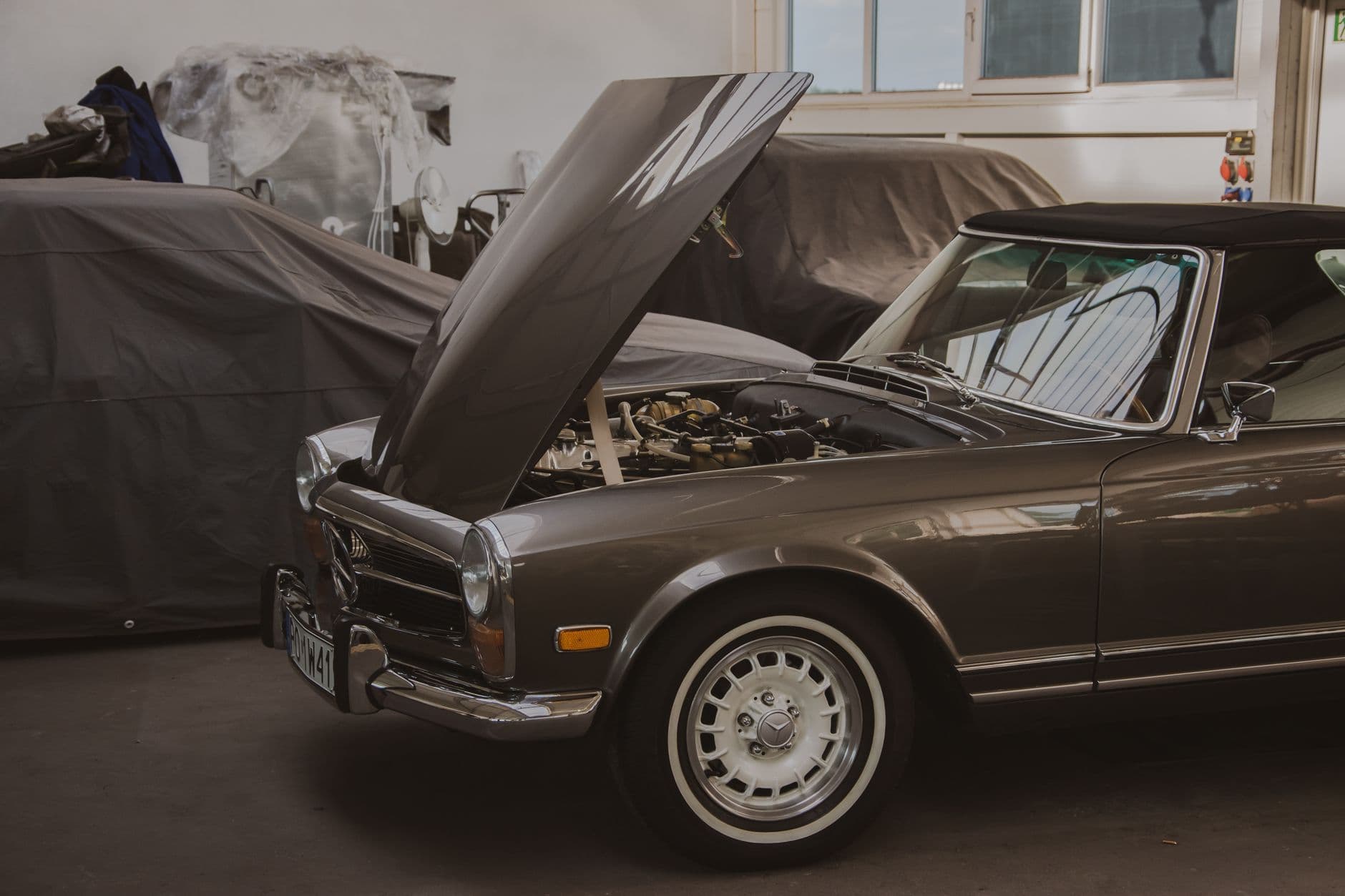
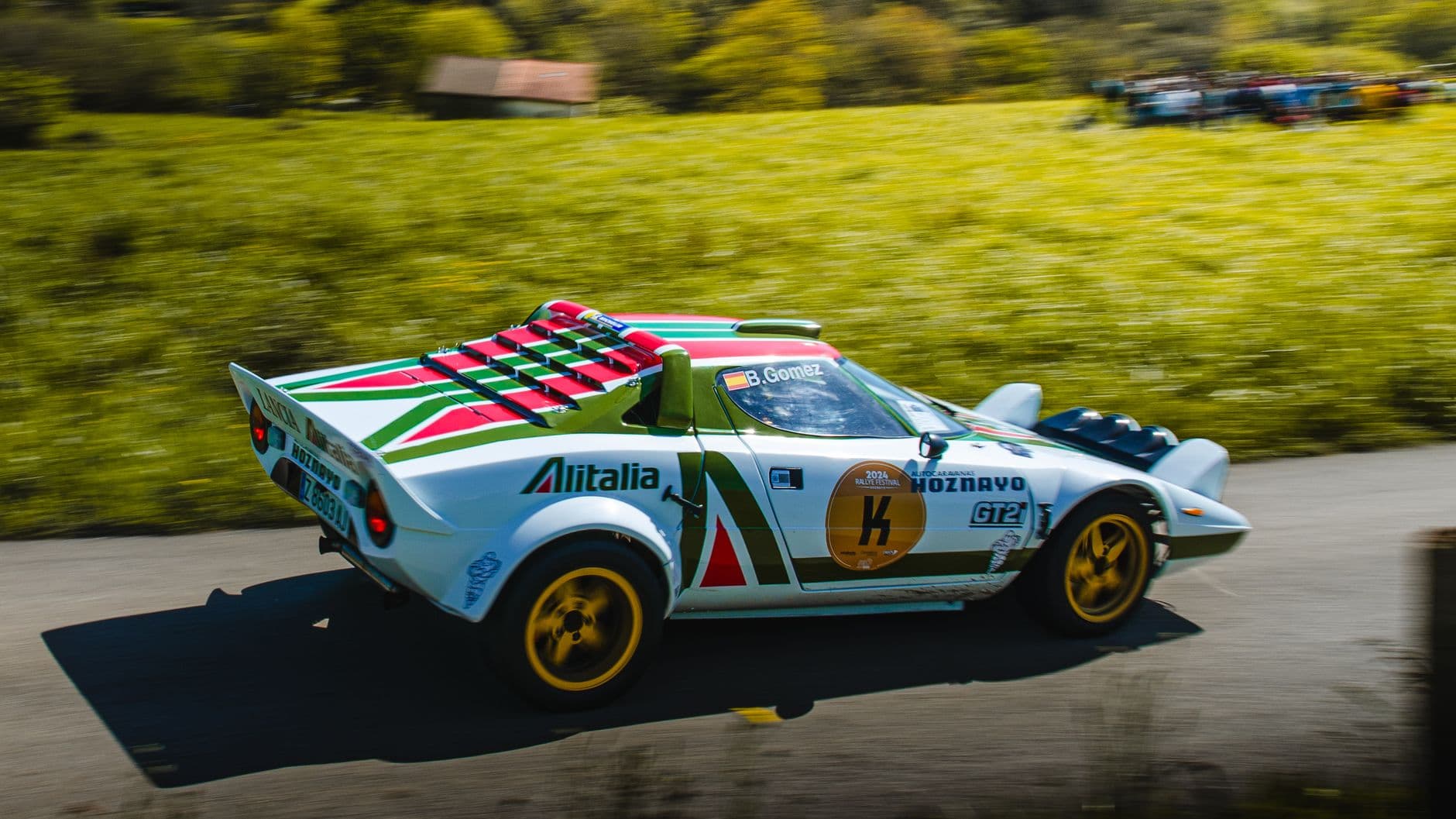
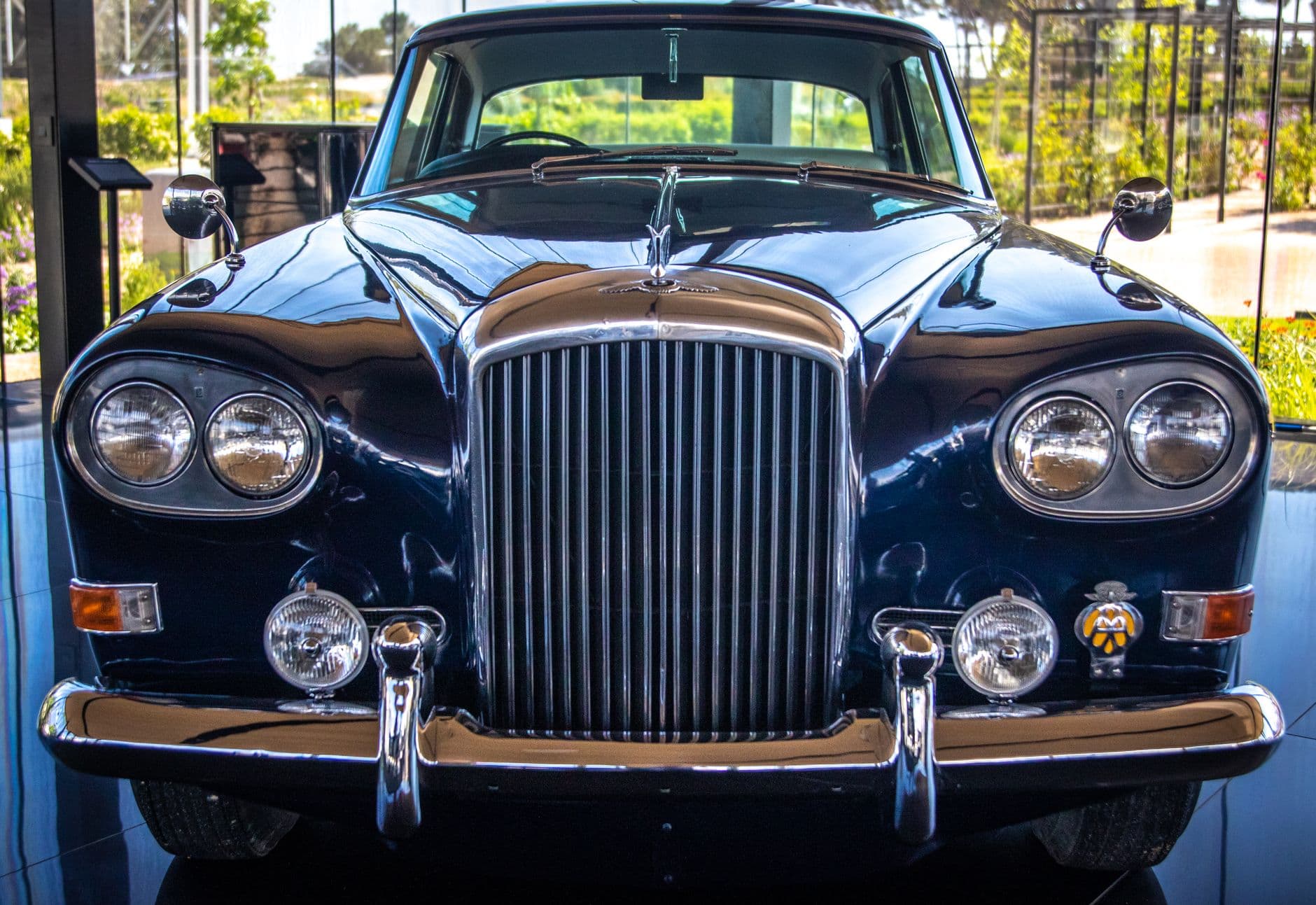
Blue-chip classics survive the end of petrol comfortably. Ordinary classics are the ones with something to fear. A combustion ban announced so far stops at the showroom door, so a Ferrari 250 GTO or a McLaren F1 stays legal to own, drive and sell for as long as anyone reading this will care. What the electric era does is quieter and more interesting: it splits the old-car market in two, and the two halves are now moving in opposite directions.
This piece reads that split in classic car values against 2026 auction data and the current, country-by-country ban timeline. Where a figure is a forecast or a draft law rather than a settled fact, it says so.
How we checked: price direction is drawn from Hagerty's Blue Chip Index and Hagerty Hundred (mid-2026) and from named auction results at Mecum and RM Sotheby's; ban timelines are taken from the UK government, the European Commission and US Public Law 119-16. All figures were checked in August 2026, and pre-sale estimates and draft laws are flagged as such.
Will classic cars lose value when petrol is banned?
Some will, and the best will not. The question treats classic cars as one asset, and in 2026 they are plainly two. At the top sits a small tier of rare, documented, provenance-rich cars whose worth rests on scarcity. Below it sits a much larger group of drivable, volume-built classics whose worth tracks how usable they are.
The clearest measure of the divide is Hagerty's own indices. Its Blue Chip Index, which follows 25 of the best post-war collectibles, sat at 75.54 in mid-2026, while the enthusiast-grade Hagerty Hundred had fallen to 48.32. The gap is 27 points. Four years ago it was under three. The best cars are pulling violently away from the cars ordinary enthusiasts own, and electrification is one of the forces prising them apart.
So the useful question is not whether classics lose value. It is which tier you are standing in. The table below sets the two apart, and the rest of this piece works through each line.
| Force | Trophy blue-chip (250 GTO, F40, McLaren F1, 300SL Gullwing) | Commodity classic (ordinary MGB, E-Type, early 911, muscle) |
|---|---|---|
| Where value comes from | Scarcity, provenance, matching numbers | Usability as a weekend or daily driver |
| Exposure to the sales ban | None; bans hit new cars only | None directly, but demand leans on driving it |
| Clean-air zone friction | Ages into historic exemption; driven a few hundred miles a year | Charged daily if too new for the exemption |
| Fuel access | e-fuel premium is a rounding error | 2.4–3.3x fuel premium is a real running cost |
| EV conversion risk | Never converted; originality is everything | Often converted; can help or hurt value |
| 2026 price direction | Setting records | Softening |
Do the petrol and diesel bans actually apply to classic cars?
No. Every ban currently on the table governs the sale of new cars, not the ownership or resale of old ones. You can keep, drive, restore and sell a petrol classic after every one of these dates. Second-hand sales are untouched, and no government has proposed removing existing cars from the road.
The timelines have also moved, which is why so much writing on this subject is out of date. The UK reinstated 2030 as the end of new pure-petrol and diesel car sales, with hybrids allowed until 2035, when new cars must be zero-emission. The European Union's binding law still sets a 100% cut in new-car emissions from 2035, but in December 2025 the Commission proposed softening that to 90%, keeping hybrids and cars running on synthetic fuel legal past 2035. The proposal is still being negotiated by Parliament and Council, so it is a direction of travel, not settled law. In the United States, California's 2035 mandate lost its federal waiver under Public Law 119-16, signed in June 2025, and the fight over it is now in court.
Old cars are then handed explicit protection. In Britain a vehicle over 40 years old rolls into the historic tax class: zero road tax, no MOT test, and exemption from London's ULEZ charge. From April 2026 that covers cars built before 1 January 1986. Germany's H-Kennzeichen frees a car once it passes 30 from every low-emission zone, and France grants the same through a 30-year "collection" registration. A trophy car ages into these exemptions automatically. The rule to remember: bans shape the future new-car fleet, and leave the classic parc alone.
Will you still be able to buy fuel for a classic car?
Yes, though the everyday classic will pay more for it than the trophy in the collection. A drop-in sustainable petrol already exists: Coryton's Sustain Classic sells in three grades with under 1% ethanol and a claimed 65% cut in greenhouse gas, and the collector insurer Hagerty backed it with a partnership in 2024. The catch is price. Sustain Classic runs roughly £3.80 to £5.24 a litre against about £1.60 for pump super, a premium of two to three times.
Synthetic e-fuel is further off than the headlines suggest. Porsche's HIF plant at Haru Oni in Chile opened in 2022 as a demonstration site, its output has stayed flat, and the promised move to mass production has slipped to 2029. The economics still favour the wealthy end of the hobby, which is exactly how Brussels framed its carve-out: e-fuel cars are treated as a niche for classic and high-end sports cars, not for daily drivers.
That is the whole point of the tier. A £5-a-litre fuel bill is nothing against a car worth several million pounds and driven three hundred miles a year. It is a genuine drag on a commodity classic used every weekend, especially since ordinary forecourt petrol went to 10% ethanol in 2021 and already corrodes older fuel systems. Combustion also has a longer runway than the death notices implied; Porsche took a writedown of more than €3.9 billion in early 2026 as it slowed its own electric plans and extended engines it had meant to retire.
Which classic cars are insulated from the EV transition?
The trophies. These are the rare, documented cars valued for scarcity rather than for being driven, and they behave far more like fine art than like transport. Only 36 Ferrari 250 GTOs were ever built; a white "Bianco Speciale" example sold for $38.5 million at Mecum in January 2026, and the open-auction record for the model stands at $51.7 million from RM Sotheby's in 2023. A 1955 Mercedes 300 SLR Uhlenhaut Coupe took €135 million in 2022, still the most expensive car ever sold at auction.
Nothing in an emissions rule touches a car like this. It was legal to own before the ban and stays legal after it, and as combustion becomes scarce the very last of the hand-built, race-bred icons look more finite, not less. The wealth backs this up: the top ten auction sales of 2025 cleared a billion dollars for the first time, at an average of about three million each. If you want the full picture of why these cars command such sums, our guide to what makes a classic car worth millions walks through provenance, rarity and originality, and our list of the most expensive cars ever sold at auction shows where the ceiling sits.
Which classic cars are most at risk?
The ordinary ones. A commodity classic earns its value from use, and electrification attacks use-value from three sides at once. Clean-air zones charge cars too new for the historic exemption, London's ULEZ at £12.50 a day. Fuel costs more. And these are the cars that converters choose to electrify, which unsettles what a petrol example is worth.
The 2026 data shows the squeeze plainly. Across fifteen months the ratio of rising to falling prices improved only once for cars under $250,000, while it improved eight times at the high end. The Hagerty Hundred sits at 48.32, and the average private classic sale is now about $25,394. The split even runs inside a single famous model: an exceptional Mercedes 300 SL Gullwing set a $4.41 million record early in 2026, while typical examples turned bearish nearer $1.35 to $2.53 million. A rare Aston Martin DB5 Shooting Brake rose more than 32% in its top grade while the ordinary coupe lagged. Scarcity appreciates; volume drifts.
Does converting a classic to electric raise or lower its value?
It depends entirely on what you convert. On a common car an electric swap can add usability value; on a rare, numbers-matching car it destroys the thing collectors pay for. The market has already sorted itself by tier. Everrati builds reversible conversions of cars like the 911 and the Pagoda SL for $250,000 to more than $500,000; Lunaz reaches seven figures on a Rolls-Royce or an Aston; Electrogenic sells drop-in kits from £15,000 for a Mini. Every one of them works on usable, volume classics. None proposes touching a 250 GTO.
The silence is the answer. A trophy's worth is entirely its originality, so no one electrifies one. Notice too that converters sell reversibility as a feature, because an irreversible swap is the value-killer, not the electric motor itself. This is the same logic that runs through our guides to matching numbers and to restoring or preserving a classic: a car is only original once, and the EV era raises the price of that originality at the top while making electrification the sensible path for the everyday car below.
What is happening to blue-chip values right now?
The market is K-shaped: a soft middle and a record-setting top. Hagerty's overall Market Rating fell to 58.28 in January 2026, its lowest in nearly 15 years, and has declined in 37 of the past 43 months. Yet the very top set records over the same stretch, and Monterey Car Week in August 2026 was forecast to approach half a billion dollars in sales. Money is concentrating into the best cars while the middle thins out.
The buyers are changing too, which decides which cars join the top tier. The average model year of a million-dollar auction car has jumped from 1972 to 1984 as younger collectors take over, and the cars they push up are analog supercars and youngtimers rather than chrome-era saloons. It is why a 1980s Ferrari F40 keeps climbing and why Nick Mason's McLaren F1 GTR carried an estimate above $35 million at Monterey. Insurers see it as well: Hagerty's average agreed value has risen 57% since 2021, a formal re-rating of these cars as appreciating assets. The named evidence sits in one place below.
| Car | Recent benchmark | Tier | 2026 direction |
|---|---|---|---|
| Ferrari 250 GTO (36 built) | $38.5M (Mecum, Jan 2026) | Trophy | Setting records |
| Mercedes 300 SLR Uhlenhaut | €135M (RM, 2022 record) | Trophy | Untouched benchmark |
| McLaren F1 / F1 GTR | $20.5M road; ~$35M GTR estimate | Trophy | Rising |
| Ferrari F40 | ~$2.5–4M typical, $5M+ best | Trophy | Climbing |
| Mercedes 300 SL Gullwing | $4.41M top vs ~$1.35M typical | Splitting | Top up, typical soft |
| Average private classic | ~$25,394 | Commodity | Softening |
Which classics are crossing from commodity to trophy?
A small, identifiable group is climbing the ladder: the analog supercars and youngtimers that younger buyers are lifting into the trophy tier. The same demographic shift that pushed the average million-dollar car into the 1980s drives it, as Gen X and millennial buyers, whose share of the market grows around 20% a year, chase the cars they grew up with. Their favourites are analog, scarce, and about to become the last hand-built combustion machines of their kind.
That combination turns a fast car into a store of value. Hagerty's 2026 Bull Market list is full of them: the Porsche Carrera GT past a million dollars, the Nissan Skyline GT-R, low-production analog Ferraris. A 1990s McLaren F1 GTR carrying a $35 million estimate tells the same story at the summit, one step above the road car we cover in our McLaren F1 guide. If you want the insulated tier at a lower entry price, this is where it is forming, so buy the documented, low-volume analog halo car now rather than the ordinary classic beside it.
So are classic cars still a good investment in the EV era?
Yes, if you buy the insulated top of the market and leave the exposed middle to the people who will actually drive it. The rule is short: in the electric era, buy provenance, not just petrol. A rare, documented, matching-numbers car sits outside the reach of any sales ban and gains from combustion becoming scarce. An ordinary drivable classic is a fine thing to own and a poor thing to bet on, because the forces electrification sets loose land squarely on it.
None of this needs the ban to be feared. It needs it to be understood. The petrol phase-out is a demolition charge under the commodity classic and a mint-mark on the trophy, and the widening gap between Hagerty's two indices is that mechanism showing up in the prices. Buy the cars that were always going to be irreplaceable, keep them original, and the end of petrol reads less like a threat than like a deadline for everyone else.
Frequently asked questions
Will petrol be banned for classic cars? No. The bans apply to sales of new cars only. Existing classics remain legal to keep and drive, and cars over 40 years old (30 in Germany and France) gain historic exemptions from road tax and clean-air zones. Sustainable and synthetic petrol is already on sale to fuel them.
Are classic cars a good investment in 2026? The best are; the average is not. Hagerty's index of 25 top collectibles sits near 75 while its enthusiast-grade Hundred has fallen to about 48, a record gap. Trophy cars are setting auction records as the broad market sits near a 15-year low.
Does an electric conversion devalue a classic? On a rare, numbers-matching car, yes, because originality is where the value lives. On a common car a reversible conversion can add usability value instead. This is why converters target ordinary classics and never touch a 250 GTO.