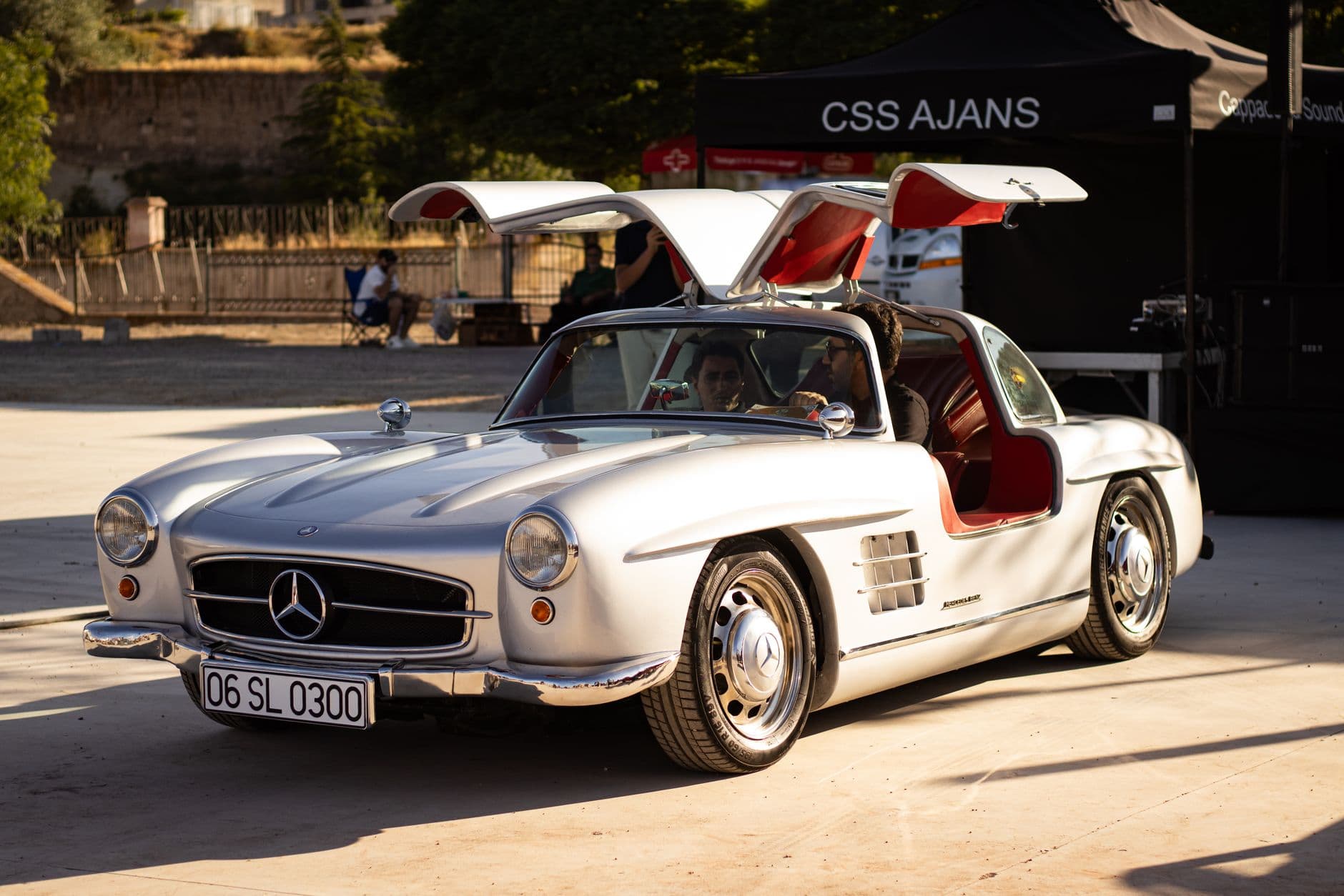
Mercedes-Benz 300 SL Gullwing premenil pretekárske auto na najokázalejšie cestné auto 50. rokov. Mal dvere otvárajúce sa nahor ako krídla, prvý vstrekovací systém paliva v sériovo vyrábanom aute a najvyššiu rýchlosť, vďaka ktorej bol najrýchlejším autom, aké ste si mohli kúpiť. Vyrobený v rokoch 1954 až 1957, je teraz sedemciferným blue chipom a jedným z definujúcich dizajnov storočia.
Prečo má 300 SL krídlové dvere?
Dvere sa otvárajú nahor, pretože podvozok nezanechal priestor pre bežné dvere. Mercedes postavil auto na ľahkom trubicovom priestorovom ráme a hlboké bočné lišty, ktoré mu dodávali tuhosť, tiež znemožňovali konvenčné dvere, preto ich inžinieri zavesili na strechu.
To, čo začalo ako technické riešenie, sa stalo charakteristickým znakom auta. Vyvýšené dvere dali kupé prezývku a jeho nezameniteľnú siluetu, a žiadne stylingové cvičenie by nedokázalo vytvoriť nič tak zapamätateľné ako riešenie vynútené pod ním sa nachádzajúcim rámom.
Ako sa pretekárske auto stalo cestným autom?
Cestný automobil vznikol na žiadosť amerického predajcu. Model 300 SL začal ako pretekársky automobil W194 z roku 1952, ktorý vyhral v tom roku Le Mans a Carreru Panamericanu, a Mercedes nemal v pláne predávať verziu verejnosti, kým newyorský importér Max Hoffman nesľúbil kúpiť tisíc kusov.
Hoffman mal pravdu o trhu. Produkčný Gullwing bol predstavený nie v Európe, ale na newyorskom autosalóne v roku 1954, zameraný priamo na bohatých amerických kupujúcich, a dostal sa na cesty s rovnakou súťažnou líniou ako továrenské vozidlá, vyvinutý pod vedením inžiniera Rudolfa Uhlenhauta.
Čo robilo 300 SL takým rýchlym?
Bolo to prvé sériové auto s vstrekovaním paliva a táto technológia z neho urobila najrýchlejšie auto svojej éry. 3,0-litrový radový šesťvalec používal mechanický systém priameho vstrekovania Bosch namiesto karburátorov, čím sa výkon zvýšil na približne 215 koní a maximálna rýchlosť sa v závislosti od prevodov posunula na približne 160 míľ za hodinu.
Žiadne showroomové auto zo stredných 50. rokov s ním nemohlo súťažiť. Kombinácia vstrekovania, ľahkého priestorového rámu a klzkého karosérneho vyhotovenia posunula Gullwing pred každého konkurenta, a to všetko pri zachovaní toho, že ste s ním mohli ísť aj na večeru.
Ktorý 300 SL je najhodnotnejší?
Vzácne Gullwingy s hliníkovou karosériou vedú pole, stoja niekoľkonásobne viac ako bežné oceľové vozidlá. Mercedes vyrobil v rokoch 1954 až 1957 1 400 kupé Gullwing, ale len 29 z nich dostalo ľahké zliatinové karosérie, a tie dosahujú najvyššie ceny zo všetkých.
| Verzia | Roky | Vyrobené | Hodnota pre zberateľa |
|---|---|---|---|
| Kupé Gullwing (oceľ) | 1954–1957 | ~1 371 | Modrý žetón, sedemciferné |
| Kupé Gullwing (zliatina) | 1955–1956 | 29 | Najhodnotnejšie, viac miliónov |
| 300 SL Roadster | 1957–1963 | 1 858 | Rastúce, použiteľnejšie |
Dobre udržiavaný oceľový Gullwing sa teraz ľahko predáva za sedem cifier, zatiaľ čo dokumentovaný hliníkový automobil dosahuje niekoľko miliónov dolárov. Pôvod a originalita rozhodnú o zvyšku, presne tak, ako opisuje náš sprievodca čo robí klasické auto hodným miliónov.
Kam patrí Gullwing v kánone tichého luxusu?
Krídlový (Gullwing) je cestná verzia pretekárskeho vozidla Mercedes-Benz 300 SLR a rovnakú umiernenosť prenáša do auta, ktoré si môžete vlastniť. Je rýchle, nádherne navrhnuté a nenápadné spôsobom, ktorý lichotí skôr vodičovi ako značke, čo je podstatou zberateľstva založeného na vkuse.
Svoje miesto si zaslúži aj vďaka samotnému dizajnu. Podobne ako Jaguar E-Type, aj Gullwing je zbieraný rovnako pre svoj tvar ako pre svoju rýchlosť, auto, ktorého formu diktovalo inžinierstvo a ukázalo sa, že je umením. Len málo objektov hovorí viac s menším množstvom.
Najčastejšie otázky
Koľko Mercedesov 300 SL Gullwing sa vyrobilo? Mercedes vyrobil v rokoch 1954 až 1957 1 400 kupé Gullwing, z ktorých len 29 malo ľahké hliníkové karosérie, po ktorých nasledovalo 1 858 roadsterov do roku 1963.
Bol 300 SL skutočne prvým sériovo vyrábaným autom so vstrekovaním paliva? Áno. Jeho 3,0-litrový radový šesťvalec používal mechanické priame vstrekovanie Bosch, čo bolo prvenstvo pre sériovo vyrábané cestné vozidlo a pomohlo mu stať sa najrýchlejším autom svojej doby.
Prečo bol model 300 SL uvedený na trh v New Yorku? Importér Max Hoffman si objednal cestnú verziu pre amerických zákazníkov a tá mala premiéru na autosalóne v New Yorku v roku 1954 namiesto v Európe.